
The 12 Month Sleep Regression: Signs, Causes and What Helps
Posted
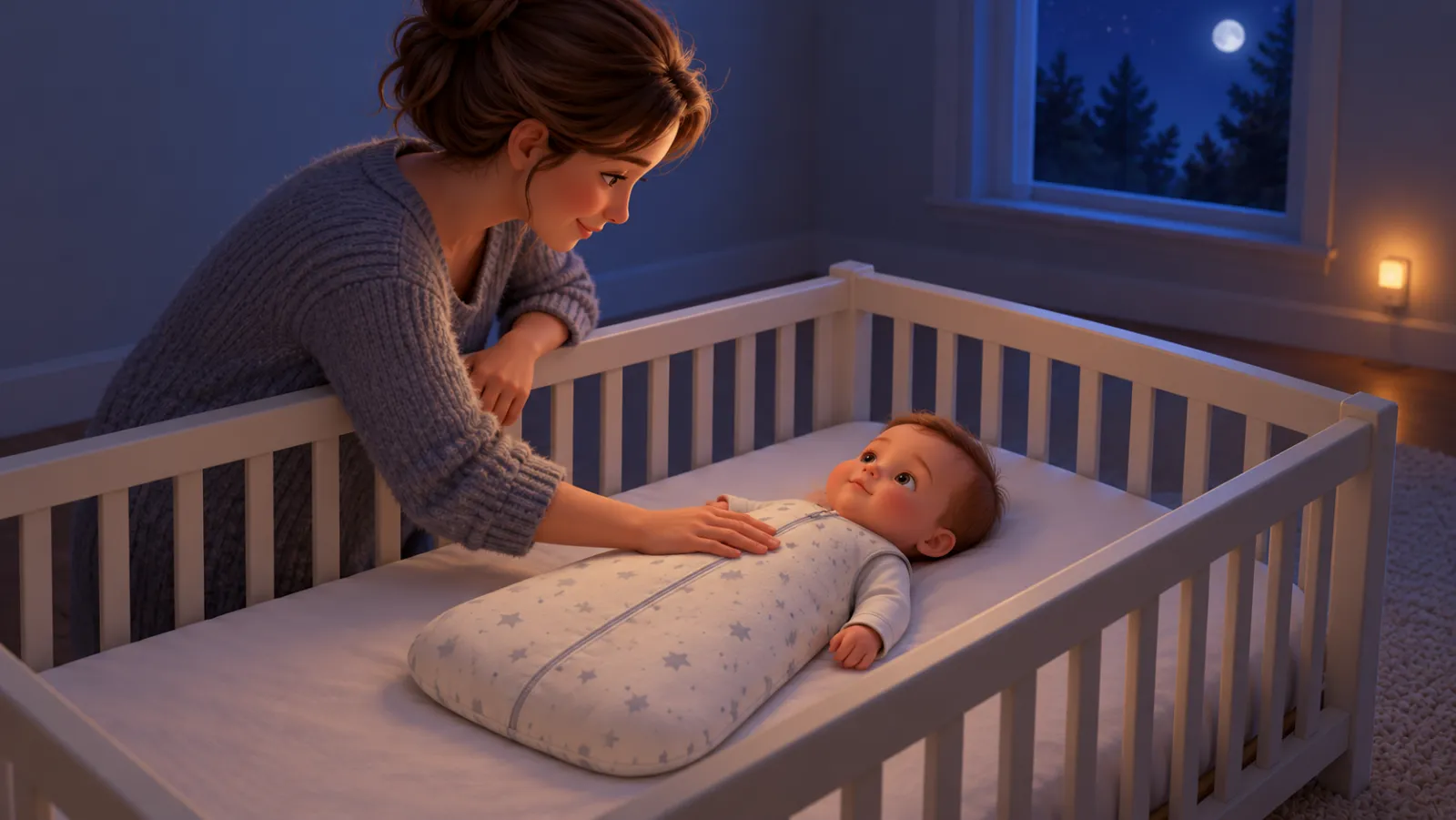
The 12 month sleep regression is a stretch of broken sleep around your baby's first birthday. A baby who had been settling well starts refusing naps, waking more overnight, or standing in the cot instead of lying down. It is usually a phase rather than a permanent sleep problem.
First steps, bigger feelings, new words and a change of nursery or childminder often land in the same few weeks. Sleep is usually the first thing to show it.
Key Takeaways
- The 12 month sleep regression is driven by development, not by anything you have done wrong.
- Common triggers are walking or first steps, new words, separation anxiety and a change of childcare.
- Typical signs are nap refusal, long bedtimes, split nights and early waking.
- Parents often report a few weeks of disruption.
- Most 12 month olds still need two naps. Dropping to one too early usually makes things worse.
What Is the 12 Month Sleep Regression?
The 12 month sleep regression is not a medical diagnosis. It is the name parents give to a run of bad nights and short naps around the first birthday, and the broken sleep behind it is real. Babies of this age are learning to pull up, cruise, walk, point, copy words and understand far more than they can say. That is a lot for a small brain and body to work through, and sleep often suffers while those skills are taking off.
Timing varies. Some babies wobble a few weeks before their birthday, others a month or two after it.
The daily schedule adds to it. A baby may start resisting the morning nap and look ready for one nap, then get overtired if you switch too soon.
12 Month Sleep Regression Signs
The signs parents describe most often are:
- Refusing the morning nap, the afternoon nap, or both.
- Bedtimes that take far longer than they used to.
- More night wakings, and longer ones.
- Split nights, meaning your baby wakes in the small hours and stays wide awake and cheerful for an hour or two.
- Waking earlier in the morning.
- Standing up in the cot instead of lying down.
- Wanting you close, and protesting hard when you leave the room.
Any one of these can happen in a normal week. It is the sudden change in a baby who had been settling well that makes it feel like a regression.
Why It Happens
There is rarely one cause. Usually a few things land at once.
Development is moving quickly
Around 12 months, many babies are starting to walk or have taken their first steps. Others are suddenly desperate to practise standing up in the cot, and much less sure about sitting back down. New movement skills are exciting, and babies are not known for keeping exciting things strictly to daytime hours.
Language is moving quickly too. A baby may follow simple phrases, use first words, point to communicate and become far more socially aware. That extra awareness shows up at bedtime, in checking for you overnight, and in finding it harder to switch off.
Separation anxiety is common at this age
The NHS describes separation anxiety as a normal stage in young children. Many one-year-olds are very aware that you can leave the room, and very unhappy about it. Bedtime is the longest separation of the day, so it is often where the protest lands.
Schedule pressure can look like a regression
A baby who fights the morning nap or takes longer to settle can look ready for one nap. Most are not ready yet, and dropping a nap early leaves them overtired, which makes settling and night waking worse rather than better.
What Helps During the 12 Month Sleep Regression
Keep the routine steady, even when sleep is wobbly
This is not the moment for a full reset. A predictable wind-down, a familiar sleep space and the same calm response overnight all help your baby feel safe while everything else is changing.
Do not rush the one-nap transition
Two naps with small adjustments usually works better than dropping straight to one. The Canadian Paediatric Society describes babies settling into two longer naps, one in the morning and one in the afternoon, by around a year old.
What often helps:
- Keeping two naps for now.
- Capping a nap if the day has drifted too late.
- Bringing bedtime forward after a poor nap day.
If nap refusal carries on for a couple of weeks, check the readiness signs before you change the whole day. See when do babies drop to 1 nap.
Respond calmly to standing in the cot
Standing in the cot is very common at this age. Keep your response boring and consistent: go in, help them lie down if they need it, say the same short thing, and leave. Plenty of standing and cruising practice during the day helps, so the cot is not the only place to try the new skill.
Keep the sleep space in line with safer sleep guidance from the NHS and The Lullaby Trust: a clear cot, a firm flat mattress, and no added pillows or loose bedding, even to stop your baby standing.
What Makes the 12 Month Sleep Regression Worse
- Dropping to one nap too early.
- Stretching wake windows, the awake time between sleeps, much longer after a couple of bad days.
- Assuming every night waking needs a brand-new strategy.
- Letting bedtime drift late after poor naps.
- Turning standing in the cot into a playful back-and-forth.
- Expecting your baby to sleep exactly as before during a burst of new skills.
When the days feel chaotic, change one thing and give it several days before you change anything else.
When to Speak to Your GP or Health Visitor
Most 12 month sleep disruption is developmental, but it is always worth checking in with your GP or health visitor if:
- Your baby seems unwell or in pain.
- Snoring, breathing concerns, or unusual sleep sounds are showing up.
- There is a major drop in appetite, fluids, or wet nappies.
- Sleep has become persistently worse for a long stretch with no obvious cause.
- You are struggling to cope with the broken sleep yourself.
Trust your instincts. If something feels off beyond the usual "tired but otherwise fine" picture, ask for support.
Frequently Asked Questions
Is the 12 month sleep regression real?
Yes, in the sense that plenty of babies sleep worse around their first birthday. It is not a formal medical diagnosis, but it is useful shorthand for a common developmental phase.
Why is my 12 month old not sleeping all of a sudden?
Usually a developmental change is behind it. Common reasons include walking or first steps, language development, separation anxiety, standing in the cot, daycare changes, teething, illness, or a nap schedule that no longer fits as well as it did a few weeks earlier.
How long does the 12 month sleep regression last?
Parents often report a few weeks, but no study has measured how long a sleep regression lasts. A short burst of new skills usually settles sooner, while a change of childcare or a schedule that no longer fits can drag on longer.
What are typical 12 month wake windows?
Many 12 month olds do well with around 3 hours 15 minutes to 4 hours of awake time between sleeps on a two-nap schedule, usually with the longest stretch before bed. See the 12 month old sleep schedule for example days.
Why does my baby keep standing in the cot instead of sleeping?
Because standing is a brand-new skill and they want to practise it. Stay calm, help them lie back down if they are stuck, and give plenty of standing and cruising practice during the day.
Related Reading
- 4 month sleep regression
- 18 month sleep regression
- Wake windows explained
- When do babies drop to 1 nap
- Tips to help your baby sleep
This article is general information and not medical advice. If you have concerns about your child's health, breathing, feeding, or sleep, please speak to your health visitor, GP, or paediatrician.